

Special Session 11: Underwater Imaging and Intelligent Detection
This Topic aims to explore the latest advancements, theoretical innovations, and practical applications in underwater vision and artificial intelligence. As the demand for marine resource development and hydraulic infrastructure inspection continues to grow, there is an increasing need for robust and accurate intelligent detection systems. This special session provides a premier platform for researchers, engineers, and industry professionals to share cutting-edge solutions, including AI-driven image enhancement, object recognition in turbid environments, and autonomous underwater vehicle (AUV) perception. We welcome submissions that address both foundational theories and real-world applications, thereby bridging the gap between advanced signal/image processing and intelligent underwater systems.
Related topics:
• Underwater image and video enhancement and restoration;
• Deep learning methods for underwater object detection and tracking;
• Artificial intelligence in sonar and underwater acoustic image processing;
• Vision-based inspection and monitoring of hydraulic structures;
• Multi-sensor data fusion for underwater perception;
• Autonomous Underwater Vehicle (AUV) and Remotely Operated Vehicle (ROV) vision systems;
• 3D reconstruction and scene mapping in underwater environments;
• Edge computing and real-time underwater intelligent processing;
• Novel datasets and evaluation metrics for underwater imaging, etc;
The manuscript should be submitted via the submission link (http://www.easychair.org/conferences/?conf=icsip2027), or to icsip2016@vip.163.com before the submission deadline (February 5, 2027).
Special Session Chairs:
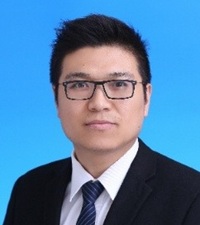
Professor, Pengfei Shi, Hohai University
Pengfei Shi is a Professor and doctoral supervisor at Hohai University. He leads the Research Team on Intelligent Operation and Maintenance Technologies for Hydropower Safety. His research focuses on the artificial intelligence, computer vision, and underwater robotics. Prof. Shi has presided over more than 10 national and provincial/ministerial research projects, and has led over 20 industry-funded projects for major organizations including State Grid, State Power Investment Corporation, China Three Gorges Corporation, China Yangtze Power, CRRC Group, provincial water resources research institutes, and so on. His industry-driven research has produced field-deployable solutions for dam inspection, defect detection, and hydropower asset management. He has authored or co-authored over 100 high-impact papers in prestigious journals including IEEE Transactions on Pattern Analysis and Machine Intelligence (T-PAMI). He is also the author of two influential books: Deep Learning for Image-Based Object Detection and Recognition and Artificial Intelligence and Robotics, which are widely used by researchers and practitioners in the field.
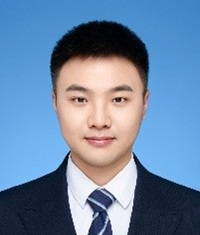
Assistant Research Professor, Ben Huang, Suzhou Institute for Advanced Research of Hohai University
Ben Huang, PhD in Engineering, is currently an Assistant Research Professor at the Suzhou Institute for Advanced Research of Hohai University. He received his doctoral degree in Hydraulic Structure Engineering from Dalian University of Technology. His research interests lie at the intersection of hydraulic structure engineering and artificial intelligence. He has participated in 2 National Key R&D Programs, 2 General Programs of the National Natural Science Foundation of China, and 8 enterprise-commissioned projects. Dr. Huang has published 11 academic papers in reputable domestic and international journals, including 4 first/corresponding author papers in top journals of Chinese Academy of Sciences' Q1 tier, 3 of which are recognized as ESI Highly Cited Papers. He has applied for 5 Chinese invention patents and 1 international invention patent, with 1 software copyright authorized.
Senior Engineer, Sisi Zhu, China Yangtze Power Co., Ltd.
Sisi Zhu is a Senior Engineer at China Yangtze Power Co., Ltd., one of the world’s largest hydropower operators. He specializes in underwater inspection technologies for critical hydraulic infrastructures, with a primary focus on developing advanced robotic systems for dam safety assessment. Mr. Zhu has led the research and development of multiple innovative underwater inspection robots specifically designed for large-scale dams. His pioneering work addresses key challenges in turbid water environments, strong currents, and complex submerged geometries. The robotic platforms he has developed integrate high-resolution imaging sonars, optical cameras with adaptive lighting, and real-time data transmission modules, enabling efficient and accurate detection of underwater defects such as cracks, erosion, and sediment accumulation. Notably, several of Mr. Zhu’s dam inspection robots have been successfully deployed in large hydropower projects along the Yangtze River, significantly improving inspection safety, reducing downtime, and lowering operational costs. His contributions bridge the gap between underwater robotics and non-destructive testing, offering practical solutions for long-term infrastructure health monitoring.
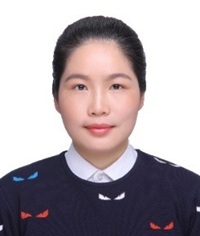
Associate Professor, Junfeng Chen, Hohai University
Junfeng Chen received the Ph.D. degree from the College of Control Science and Engineering, Zhejiang University, China, in 2011. From 2016 to 2017, she was an Academic Visitor with the School of Computer Science, University of Birmingham, U.K., where she focused on developing deep learning models for time series forecasting. She is currently an Associate Professor with the College of Artificial Intelligence and Automation, Hohai University, Changzhou, China. Her research interests include image super-resolution and restoration, adversarial attacks and security defense in neural networks, and time series forecasting techniques and their applications.